Pillar · Tech Founder Frauds
The Tech Founder Fraud Playbook
Five empires built on charisma, slide decks, and lies. The Bankrupt Giants files on FTX, Theranos, WeWork, Nikola, and Enron.
Five empires. Sixty-three billion at the top of Enron; forty-seven billion at the top of WeWork; thirty-four billion at Nikola; thirty-two billion at FTX; nine billion at Theranos. All five collapsed to zero, all five had a charismatic founder at the centre, and all five had a corporate accounting trick that allowed the story to outrun the underlying reality for years.
The accounting trick is different in each case but the structural function is the same. At Enron, mark-to-market accounting let the company book the lifetime projected profit of a long-term energy contract in the quarter the contract closed; when the projections did not materialize, the losses were quietly moved into off-balance-sheet partnerships called the Raptors, which were owned and operated by CFO Andy Fastow personally. At Theranos, the trick was simpler: the proprietary Edison blood-testing device did not work, so the company ran the vast majority of its tests on conventional third-party machines while telling patients and partners the results came from Edison. At Nikola, the trick was a single Bloomberg video in 2018 showing a Nikola One truck rolling under its own power; in reality, founder Trevor Milton had positioned the truck at the top of a hill, removed the brakes, and filmed it rolling downhill. At WeWork, the trick was the $47 billion private valuation itself, which was the product of SoftBank's repeated rounds and not of any cash-flow analysis any auditor would have signed. At FTX, the trick was the affiliate balance sheet between the exchange and Alameda Research — the special exemption from auto-liquidation, the unsegregated customer wallets, the FTT token issued from thin air.
Every one of these schemes was caught by a single piece of investigative work done outside the company. John Carreyrou's October 2015 Wall Street Journal series broke Theranos. The Hindenburg Research short report on September 10, 2020 broke Nikola — published the same week General Motors announced a partnership. The S-1 filing for WeWork's planned 2019 IPO broke that company on its own — the disclosures of self-dealing and supervoting structure were enough that the IPO was withdrawn and Adam Neumann was ousted within six weeks. The CoinDesk balance-sheet leak on November 2, 2022 broke FTX. The SEC inquiry that began in October 2001 broke Enron.
The investors in each of these failures performed minimal diligence. Sequoia Capital, Tiger Global, BlackRock, the Ontario Teachers Pension Fund, and the Singapore sovereign wealth fund Temasek all wrote checks into FTX without independently auditing the relationship between FTX and Alameda Research. Theranos's board of directors at the height of its valuation included former Secretaries of State Henry Kissinger and George Shultz, former Secretary of Defense Bill Perry, former Secretary of Defense Jim Mattis, and former Secretary of Defense Sam Nunn — not one of whom had any background in medical diagnostics. SoftBank's Masayoshi Son repeatedly funded WeWork at higher valuations. General Motors signed an MOU with Nikola for a $2 billion partnership without verifying that the demonstrator truck could move under its own power.
The criminal accountability has been uneven. Sam Bankman-Fried received 25 years in federal prison. Jeff Skilling received 24 years and served 12. Elizabeth Holmes received 11 years and three months. Trevor Milton received four years. Adam Neumann has not been criminally charged; he walked away from WeWork with approximately $1.7 billion when SoftBank bought out his founder shares in October 2019. The pattern is that prison time correlates with whether the fraud directly cost retail investors (FTX, Theranos, Enron) or only institutional investors (WeWork) — and with whether the founder cooperated.
The structural conditions that produced each of these frauds — late-stage private capital with little diligence, founder-friendly governance with supervoting shares, regulators willing to give the benefit of the doubt to a celebrated brand, and a tech and business press that treats early valuation as confirmation rather than hypothesis — are all still in place as of 2026. The criminal cases produced no meaningful change to the underlying private-market infrastructure that produced the frauds. Every founder fraud in this collection had multiple rounds of institutional money behind it. None of those institutional investors faced any consequences. Sequoia Capital remains one of the most powerful venture firms in the world. SoftBank's Vision Fund continues to operate. Tiger Global continues to raise multi-billion dollar funds.
The five films in this collection — FTX, Theranos, WeWork, Nikola, and Enron — are the on-the-record case studies. The cumulative paper losses across the five exceed $185 billion. The cumulative criminal sentences served by founders total under 50 years. The ratio is approximately $3.7 billion per year of prison time. That is not a deterrent.
Films in this collection
-
 FTX
FTXHow Sam Bankman-Fried Secretly Lost FTX's $32B in 10 Days
-
 Theranos
How Elizabeth Holmes Secretly Stole $9 Billion with Fake Blood Tests
-
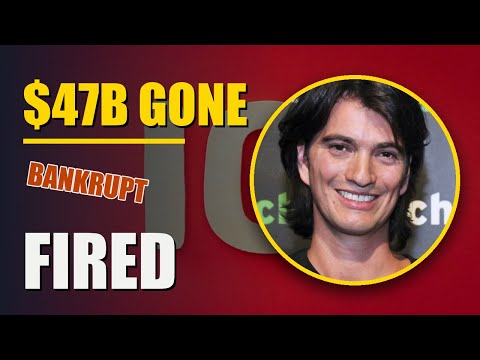 WeWork
How Adam Neumann Really Killed WeWork's $47B Empire in 33 Days
-
 Nikola
$34B Disaster: How Trevor Milton Killed Nikola
-
 Enron
EnronHow Skilling Really Killed Enron's $63B Empire in 90 Days
Frequently Asked Questions
What is the most common pattern in startup fraud?
Independent investigations of FTX, Theranos, WeWork, Nikola, and Enron all show the same arc. A charismatic founder pitches a transformative product. Early investors validate the pitch at a high valuation, which becomes the social proof for the next round. The product never works as advertised. The founder uses accounting tricks — Enron's mark-to-market, FTX's affiliate-balance-sheet shuffle, Nikola's faked truck demo — to keep the story going. The fraud is exposed by a single piece of investigative work — John Carreyrou's Wall Street Journal series for Theranos, Hindenburg Research for Nikola, the CoinDesk balance-sheet leak for FTX, the S-1 filing for WeWork, and the SEC inquiry for Enron.
Which is the biggest tech fraud in history?
By peak valuation: WeWork ($47 billion in early 2019), Nikola ($34 billion in June 2020), FTX ($32 billion in early 2022), Theranos ($9 billion in 2014), and Enron ($63 billion at its 2000 peak market cap — the largest of the five, and the predecessor to all of them). Enron's December 2001 Chapter 11 filing was the largest U.S. corporate bankruptcy in history at the time.
Did anyone actually go to prison for tech fraud?
Yes — though the sentences vary widely. Sam Bankman-Fried (FTX) received 25 years. Elizabeth Holmes (Theranos) received 11 years and three months. Jeff Skilling (Enron) received 24 years but was released after 12. Trevor Milton (Nikola) received four years. Adam Neumann (WeWork) has not been criminally charged; civil suits against him were settled.
Why do investors keep falling for the same frauds?
Because the social proof from prior rounds is treated as diligence by subsequent investors. Sequoia, Tiger Global, the Ontario Teachers Pension Fund, and the Singapore sovereign wealth fund all invested in FTX without independently auditing the relationship between FTX and Alameda Research. SoftBank's Masayoshi Son personally championed WeWork at successively higher valuations without basic real estate diligence. Theranos's board included Henry Kissinger, George Shultz, and James Mattis — none of whom had any background in medical diagnostics. The signal of 'who else is in the deal' kept overriding the signal of 'does the product actually work.'
One bankruptcy a week.
Subscribe on YouTube to see which giant falls next.